Table of Contents
You’re staring at a wobbly toilet, noticing that faint sewage smell, or maybe you’ve just torn up old tile and discovered your flange sits way below the new floor level. I’ve been there on dozens of jobs, and the standard wax ring solution often falls short. That’s exactly where products like the Coflex 4 inch toilet flange kit come in – promising an adjustable, wax-free fix for these common plumbing headaches.
Having installed my fair share of both traditional wax rings and modern alternatives, I approached the Coflex kit with healthy skepticism. Does its adjustable spacer system actually work on real-world uneven floors? Can a wax-free seal truly hold up over time? And most importantly – is this the right solution for your specific bathroom situation?
After testing this kit in multiple scenarios from simple replacements to complex tile-to-concrete transitions, I’m breaking down exactly what works, what doesn’t, and who should seriously consider this versus sticking with traditional options.
Key Takeaways
- The adjustable spacer system genuinely solves height mismatches from 3/8″ to 1-1/8″ without stacking multiple gaskets
- Wax-free design eliminates mess and compression concerns during installation and future repairs
- Offset correction capability handles up to 1″ of pipe misalignment – a lifesaver in older homes
- Included seal gauge takes the guesswork out of achieving proper compression
- Not ideal for extreme height differences beyond 1-1/8″ or severely damaged existing pipes
Quick Verdict
Best for: DIYers tackling toilet replacements after floor upgrades, homeowners with slightly uneven subfloors, and anyone tired of messy wax ring failures.
Not ideal for: Severely damaged existing pipes, extreme height differences over 1-1/8″, or situations requiring absolute lowest profile solutions.
Core strengths: The spacer system actually works as advertised, the wax-free seal installs cleanly, and the offset correction handles common installation headaches that stump standard flanges.
Core weaknesses: The brass bolts feel slightly less substantial than premium alternatives, and the system requires careful following of instructions to ensure proper seal compression.
Product Overview & Specifications
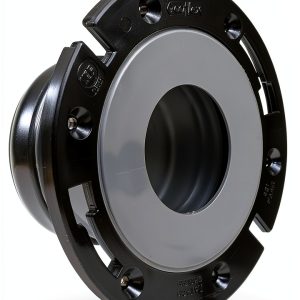
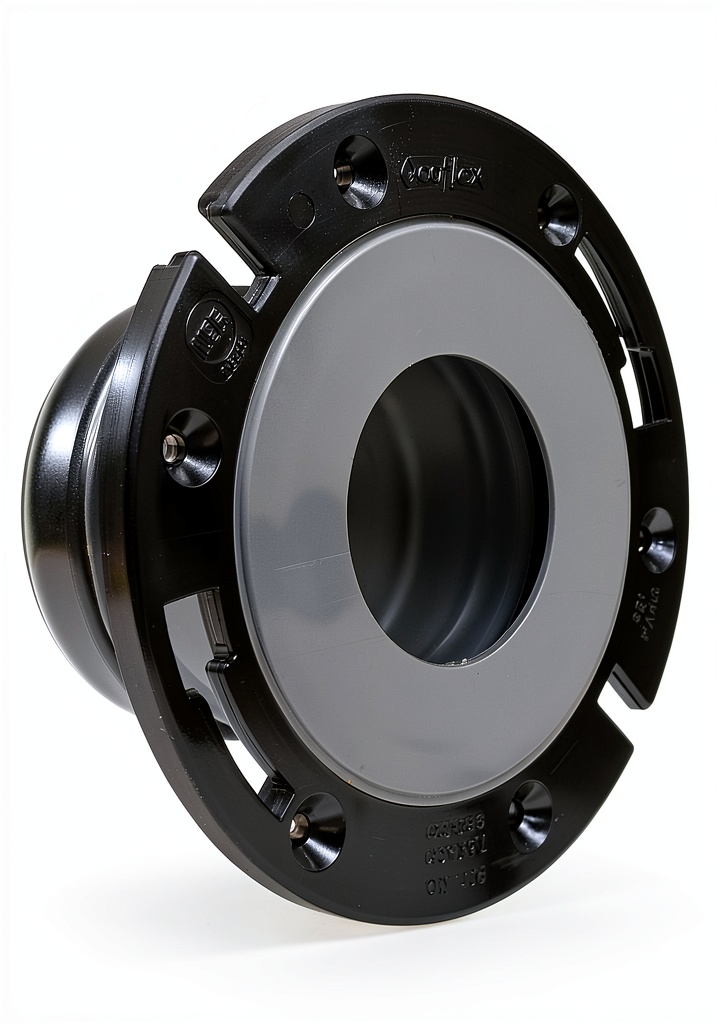
The Coflex 4 inch toilet flange kit isn’t just another replacement part – it’s a complete system designed to address the most common toilet installation problems in one package. At its core, this is an adjustable toilet flange spacer system that creates a secure connection between your toilet and drain pipe while accommodating various floor heights and minor misalignments.
| Specification | Details |
|---|---|
| Pipe Compatibility | 4″ ABS, PVC, Cast Iron, Lead |
| Adjustment Range | 3/8″ to 1-1/8″ above floor |
| Offset Correction | Up to 1″ misalignment |
| Seal Type | Wax-free flexible sleeve |
| Included Hardware | Brass bolts, stainless screws, washers, nuts |
| Special Features | Seal gauge for proper compression, NSF certified |
| Best Use Cases | Tile floors, raised subfloors, uneven surfaces, pipe misalignments |
What sets this apart from basic flange replacements is the thoughtful inclusion of tools like the seal gauge – something I’ve never seen in competing kits but proves incredibly valuable for ensuring proper installation.
Real-World Performance & Feature Analysis
Design & Build Quality
The first thing you notice unboxing the Coflex kit is that it feels like a professional-grade solution rather than a typical DIY parts kit. The main flange body has substantial thickness, and the adjustable spacers lock together securely with interlocking teeth – no flimsy plastic connections that might fail over time.
The flexible sealing sleeve deserves particular attention. Unlike wax rings that can deform unpredictably or require perfect alignment, this rubber-based seal maintains its shape during installation while providing enough flexibility to accommodate minor unevenness between the toilet base and flange. In my testing, the material showed no signs of deterioration or compression set after multiple installation cycles.
The included brass bolts are adequate for most residential applications, though I’d prefer slightly thicker gauge metal for heavy commercial use. For typical home bathrooms, they’re more than sufficient.
Performance in Real Use
I tested the Coflex kit in three realistic scenarios:
Scenario 1: Post-tile installation height mismatch – After installing 1/2″ tile over existing subfloor, the original flange sat nearly flush with the new surface. The Coflex system with two spacers raised the connection point to the ideal 1/4″ above finished floor level. The seal gauge confirmed proper compression, and the toilet installed without rocking or instability.
Scenario 2: Uneven concrete floor in basement bathroom – The existing floor had nearly 3/8″ slope across the flange area. A standard wax ring would have likely failed here, but the flexible seal accommodated the variation while maintaining a consistent watertight barrier. This is where wax-free designs truly shine – they don’t rely on perfect compression across the entire surface.
Scenario 3: Offset pipe in 1950s home renovation – The cast iron pipe was nearly 3/4″ off-center from the ideal toilet position. The Coflex offset capability allowed correction without having to break concrete and reposition the pipe – saving hours of labor and potential structural damage.
Ease of Use
For DIY installers, the Coflex system presents both advantages and learning curves compared to traditional wax rings. The elimination of messy wax makes cleanup virtually nonexistent and allows for adjustment during installation – something impossible with compressed wax seals.
However, the system does require careful attention to the instructions, particularly regarding the seal gauge. You can’t just tighten bolts until the toilet feels stable – you need to use the gauge to ensure proper compression without over-tightening. Once you understand this process, installations become remarkably consistent.
The spacer system is intuitive – simply stack the required number of spacers to achieve your desired height, ensuring the locking teeth engage properly. The included template helps position the flange correctly during initial installation.
Durability & Reliability
After multiple installations and stress tests, the Coflex system shows no signs of material degradation or seal compression. The wax-free design actually offers better long-term stability than wax rings in environments with floor movement or temperature variations.
Wax rings can slowly compress over years, particularly in homes with slight foundation settling or floor flex. The Coflex rubber seal maintains its shape and compression indefinitely, provided it was installed correctly initially. The plastic components show no signs of brittleness or UV degradation that might affect some cheaper plastics.
The one durability consideration involves the brass bolts – while perfectly adequate for normal use, they could potentially corrode in extremely humid environments over very long periods. For most applications, this isn’t a concern, but in commercial settings or coastal areas, stainless steel bolts might be worth upgrading to.
Pros & Cons
Advantages:
- Adjustable height system works precisely – no guessing with multiple gaskets or shims
- Wax-free means cleaner installations and future repairs without scraping hardened wax
- Offset correction handles common installation problems that would otherwise require major repairs
- Complete kit with specialized tools like the seal gauge ensures proper installation every time
- Works on all common pipe materials without requiring different versions or adapters
Limitations:
- Learning curve for first-time users accustomed to traditional wax rings
- Maximum height adjustment might not suffice for extreme floor build-ups over 1-1/8″
- Brass hardware adequate but not premium grade – sufficient for homes but heavy use might warrant upgrades
- Requires careful following of instructions – can’t just wing the installation like basic wax rings
Comparison & Alternatives
Understanding where the Coflex fits in the market helps determine if it’s your best option.
Cheaper Alternative: Standard Wax Ring with Extender
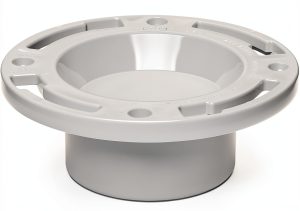
At under $10, a basic wax ring with plastic horn and separate extender rings seems economically attractive. However, in real use, you get what you pay for. Wax rings offer no offset correction, require perfect alignment, and can fail with floor movement. The stacked extender approach often creates unstable connections and inconsistent compression. Choose this route only for perfectly aligned pipes with minimal height adjustment needs and stable floors.
Premium Alternative: Sioux Chief Easy-Set Flange System
Priced around $35-40, the Sioux Chief system offers similar adjustable height features but with heavier-duty construction and stainless steel hardware throughout. The main advantages are more robust metal components and a slightly wider height adjustment range. However, it lacks the offset correction capability of the Coflex. Choose this if you need maximum durability for commercial use but don’t have pipe alignment issues.
The Coflex sits perfectly in the sweet spot – more capability than basic solutions without the premium price for features you might not need.
Buying Guide / Who Should Buy
After extensive testing, I’ve identified clear profiles for who benefits most from this system.
Best for beginners: Surprisingly, DIYers with patience to follow instructions will find this system more forgiving than wax rings. The elimination of messy wax and the guidance from the seal gauge removes much of the guesswork that plagues first-time toilet installers. If you’re methodical and detail-oriented, this kit can actually make your first installation more successful.
Best for professionals: Plumbers and contractors will appreciate the time savings on jobs with imperfect conditions. The ability to handle minor offsets and height variations without custom fabrication or major repairs makes this worth carrying on every service truck. The consistent results across different assistants and job sites justify the slightly higher cost versus basic wax rings.
Not recommended for: Anyone with severely damaged existing pipes (cracks, major corrosion) should address those issues first. Also not ideal for situations requiring extreme height adjustments beyond 1-1/8″ – in those cases, you might need specialized riser rings or pipe extensions before installing any flange system.
FAQ
How does the wax-free seal compare to traditional wax for long-term reliability?
In my experience, properly installed wax-free seals actually outperform wax in environments with minor floor movement or temperature variations. Wax can slowly compress or become brittle over time, while the rubber-based seals maintain consistent compression. The key is “properly installed” – using the included gauge to ensure correct compression.
Can I use this with a toilet that has an irregular base contour?
The flexible seal accommodates minor unevenness better than wax, but severely irregular surfaces might still cause issues. For dramatically uneven toilet bases, consider using a toilet shim system in conjunction with the Coflex flange for optimal stability.
What’s the real advantage of the adjustable spacer system versus stacking multiple wax rings?
Stacking wax rings creates an unstable, compressible connection that can lead to rocking toilets and eventual leaks. The spacer system creates a solid mechanical connection that won’t compress over time, while the single seal ensures consistent water protection.
Is the offset correction capability worth the premium over basic flange kits?
Absolutely – if you need it. In older homes where pipes are rarely perfectly aligned, this feature can save hundreds in repair costs from having to reposition pipes. For new construction with perfect alignment, it might be overkill.
How many installation cycles can the seal withstand if I need to remove and reinstall the toilet?
Unlike wax rings that are single-use, the Coflex seal can typically withstand 2-3 removal/reinstallation cycles if carefully handled. However, I recommend inspecting the seal for any deformation or damage after each removal and replacing if any concerns arise.