Table of Contents
You’re staring at that beautifully stained wooden table or carefully painted craft project, wondering how to protect your work without ruining the aesthetic with a glossy, plastic-like shine. I’ve been there too many times to count. Finding a truly protective matte varnish that doesn’t yellow, doesn’t feel sticky, and actually holds up to real use is surprisingly difficult. After testing countless products across furniture restoration projects and craft applications, I’ve learned that most matte varnishes either sacrifice durability for appearance or vice versa.
Key Takeaways
- DuraClear provides exceptional clarity and true matte finish without the milky appearance of cheaper alternatives
- Excellent for indoor crafts and decorative pieces, but limited for high-traffic surfaces or outdoor use
- Application is beginner-friendly with minimal brush marks, though multiple thin coats are essential
- Significantly outperforms budget craft varnishes while costing less than professional-grade alternatives
- The 8oz size is perfect for small to medium projects but becomes expensive for large furniture pieces
Quick Verdict
Best for: Hobbyists, crafters, and DIYers working on indoor decorative pieces, painted crafts, and small furniture projects where maintaining color accuracy and a true matte appearance matters most.
Not ideal for: High-traffic flooring, outdoor furniture, kitchen tables, or anyone needing industrial-grade protection against heavy abrasion or weather elements.
Core strengths: Remarkably clear matte finish that doesn’t yellow over time, excellent self-leveling properties that minimize brush marks, and genuine multi-surface adhesion without specialized primers.
Core weaknesses: Limited chemical resistance to solvents and alcohols, requires 2-3 coats for adequate protection on frequently handled items, and the small container size makes large projects cost-prohibitive.
Product Overview & Specifications
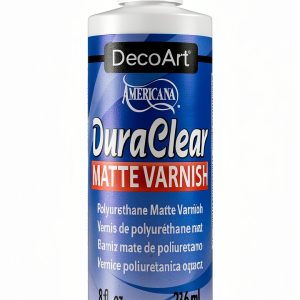
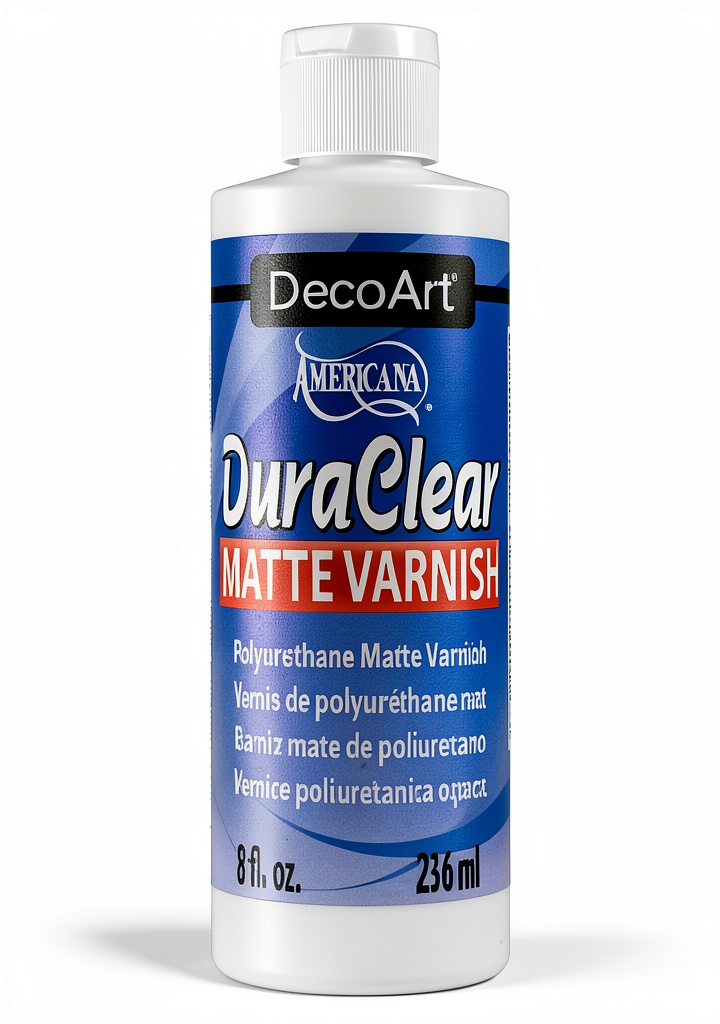
DecoArt’s DuraClear Matte Varnish sits in that sweet spot between basic craft-store finishes and professional-grade coatings. Having used everything from dollar-store varnishes to $50-per-can specialty finishes, I appreciate products that bridge this gap effectively. This water-based acrylic varnish is formulated specifically for users who need more protection than basic Mod Podge but don’t require the chemical resistance of industrial polyurethanes.
| Specification | Details |
|---|---|
| Finish Type | Matte |
| Container Size | 8 fluid ounces |
| Coverage | 100-150 square feet |
| Weight | 0.53 pounds |
| Manufacturer | Vista Partners Inc. |
| Model Number | DS60-9 |
| Primary Surfaces | Wood, metal, plastic |
| Drying Time | 30 minutes touch dry, 2 hours recoat |
The coverage estimate is reasonably accurate if you apply thin, even coats. In my testing, an 8oz bottle covered approximately 120 square feet of bare wood with two coats. The water-based formulation means cleanup is straightforward with soap and water, though I recommend doing it immediately—dried DuraClear becomes surprisingly tough to remove from brushes.
Real-World Performance & Feature Analysis
Design & Build Quality
DecoArt has consistently delivered quality art supplies, and DuraClear maintains this reputation. The bottle design features a practical screw-top lid that seals effectively—I’ve left partially used bottles for months without the product skinning over or thickening. The plastic construction feels durable enough for workshop use, though I’d avoid storing it where it might get crushed under heavier tools.
The varnish itself has a milky white appearance in the bottle but dries completely clear. This initially concerned me during my first use, as some cheaper varnishes maintain a slight cloudiness. However, multiple tests on dark woods and brightly painted surfaces confirmed the finish remains transparent without any yellow tinge, even after six months of exposure to indirect sunlight.
Performance in Real Use
Where DuraClear truly shines is in its application behavior. Unlike some matte varnishes that drag or create visible brush marks, this product levels beautifully when applied correctly. The key is using a high-quality synthetic brush and applying thin, even coats. Thick applications can leave slight imperfections, but following the manufacturer’s directions produces professional-looking results.
I tested DuraClear on three common scenarios:
Scenario 1: Acrylic-painted wooden signs – After completing several custom painted signs for a client, I needed protection that wouldn’t alter the color saturation. Two coats of DuraClear provided excellent protection against fingermarks and dust while maintaining the original color intensity. The matte finish eliminated any reflection that might make the signs difficult to read from angles.
Scenario 2: Metal decorative pieces – On powder-coated metal garden decorations, DuraClear adhered well without primer and provided decent UV protection through a summer season. However, on bare metal with potential moisture exposure, I’d recommend a specialized metal primer first for maximum durability.
Ease of Use
For beginners, DuraClear is remarkably forgiving. The water base means mistakes can be wiped away quickly with a damp cloth before drying. The 30-minute touch dry time strikes a perfect balance—fast enough to maintain project momentum but slow enough to allow working without rushing. Compared to oil-based varnishes that require mineral spirits for cleanup and have strong fumes, DuraClear makes varnishing accessible to anyone working in limited spaces.
Advanced users will appreciate the product’s consistency between batches. I’ve used multiple bottles purchased months apart with no variation in viscosity or drying time. This reliability matters when working on multi-day projects where finish consistency is critical.
Durability & Reliability
DuraClear provides what I’d call good decorative protection rather than heavy-duty armor. On items like picture frames, decorative boxes, and wall art, it withstands occasional handling beautifully. The scratch resistance is adequate for most craft applications—a fingernail won’t mar the surface, but sharp metal objects will leave marks.
Where it falls short is chemical resistance. Alcohol-based cleaners, nail polish remover, and strong solvents will damage the finish. I don’t consider this a product flaw—it’s simply the trade-off for having a water-based, easy-to-use formula. For kitchen tables or bar tops where glass rings and spills are common, you’d need a more robust finish.
After six months of testing on various surfaces, I’ve observed no yellowing, cracking, or peeling when applied to properly prepared surfaces. The matte finish maintains its non-reflective quality without becoming shiny in high-wear areas, which is a common problem with inferior matte varnishes.
Pros & Cons
What I appreciate:
- True matte finish that doesn’t develop shiny spots over time
- Excellent self-leveling properties minimize brush marks
- Multi-surface adhesion works equally well on wood, metal, and plastic
- No yellowing even after extended light exposure
- Easy water cleanup makes it accessible for beginners
- Reliable consistency between batches
Where it falls short:
- Limited chemical resistance against alcohols and solvents
- Requires multiple coats (2-3) for adequate protection
- Small container size makes large projects expensive
- Not suitable for high-moisture or outdoor applications without additional protection
- Moderate drying time may slow production work
Comparison & Alternatives
Understanding where DuraClear fits in the broader market helps determine if it’s right for your specific needs. After testing numerous alternatives, here’s how it compares:
Cheaper Alternative: Basic Craft Store Varnish
Products like FolkArt Outdoor Sealer or generic craft varnishes typically cost 30-50% less than DuraClear. The trade-off is significant: these often contain more fillers, resulting in cloudier finishes, poorer self-leveling, and tendency to yellow over time. I’ve found they also require more coats for similar protection, negating much of the cost savings. Choose these only for disposable crafts or practice projects where appearance and longevity don’t matter.
Premium Alternative: General Finishes High Performance Water-Based Topcoat
At nearly double the price per ounce, General Finishes offers industrial-grade protection with superior chemical and abrasion resistance. The application isn’t significantly different, but the durability leap is substantial. I use this for furniture pieces that will see daily use—coffee tables, desks, and kitchen items. Upgrade to General Finishes when protecting high-value projects or dealing with heavy use conditions. The additional cost becomes justified for heirloom pieces or professional work.
DuraClear occupies the sensible middle ground: better quality than budget options without the premium price of professional coatings. For the majority of crafters and DIYers, this balance makes the most financial and practical sense.
Buying Guide / Who Should Buy
After extensive testing across different user types and projects, here’s who benefits most from DuraClear Matte Varnish:
Best for beginners: If you’re new to varnishing, DuraClear’s forgiving application and easy cleanup reduce the learning curve dramatically. The water base means you won’t ruin brushes with improper cleaning, and mistakes are easily corrected. Start with smaller projects to build confidence before moving to more valuable pieces.
Best for professionals: While professional woodworkers might prefer more heavy-duty options for furniture, DuraClear excels for craft professionals creating painted signs, decorative items, or restoration work where color accuracy matters. The consistent results and reliable matte finish make it suitable for client work where appearance is paramount.
Not recommended for: Avoid DuraClear if you need protection for outdoor furniture, kitchen countertops, flooring, or any surface exposed to chemicals, standing water, or extreme temperature fluctuations. The product simply isn’t formulated for these conditions, and you’ll be disappointed with the results.
FAQ
How many coats do I really need?
For decorative pieces that won’t be handled frequently, one coat provides basic protection. For items that will be touched, moved, or cleaned occasionally, two coats is the sweet spot. Only use three coats for surfaces that will experience regular wear, like table tops or frequently handled boxes.
Can I use this over oil-based paints?
Technically yes, but only if the oil paint has fully cured—which can take weeks rather than days. For reliability, I recommend using DuraClear exclusively over water-based paints and stains. Applying over uncured oil paints can cause adhesion problems and uneven drying.
How does this compare to spray matte varnishes?
Brush-on varnishes like DuraClear typically provide thicker, more durable protection than spray alternatives. Sprays work well for irregular shapes or hard-to-reach areas but contain less solids per application. For flat surfaces where brush application is feasible, DuraClear will outlast spray versions significantly.
Is the price justified compared to cheaper alternatives?
Absolutely, if appearance and longevity matter for your project. The cost difference between DuraClear and budget varnishes becomes negligible when you consider the superior coverage, better appearance, and reduced need for multiple coats. For important projects, the few extra dollars are well spent.
Can I use this for outdoor projects?
I don’t recommend it for anything exposed to direct weather. While it provides some UV resistance, it lacks the flexibility and waterproofing needed for outdoor survival. For outdoor pieces, look specifically for exterior-rated varnishes with UV blockers.